Inside Every GovAI Operating Kit
The SIP initialises the session. The HDI organises the knowledge. The mind map shows the pathway. The Know-How Pack performs the job.
Read extended image description
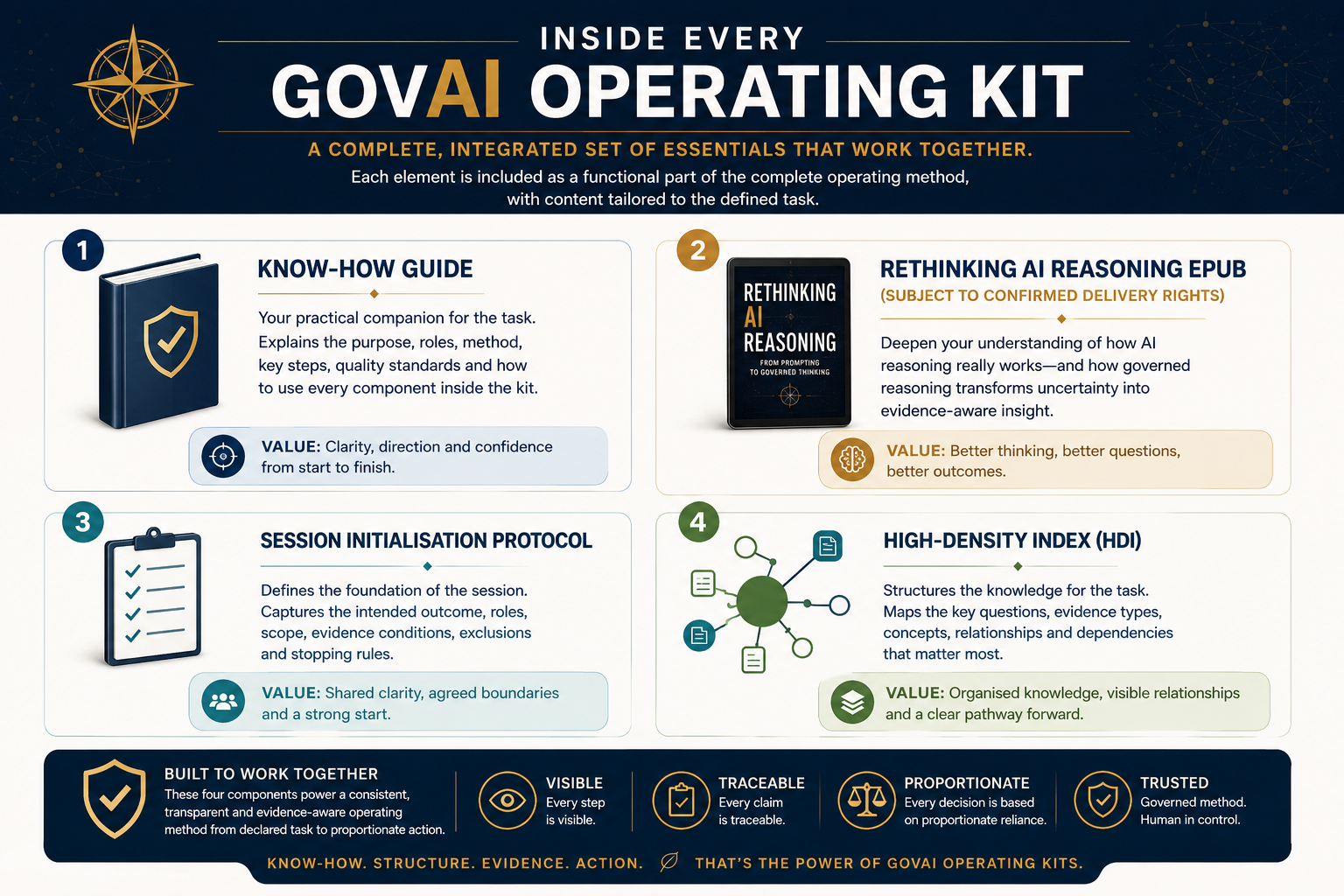
The first group establishes the foundation of the Kit. The Know-How Guide explains the task, roles, method and quality expectations. The book deepens understanding of governed reasoning, subject to confirmed delivery rights. The SIP establishes outcome, roles, scope, evidence conditions, exclusions and stopping rules. The HDI maps the key questions, evidence types, concepts, relationships and dependencies.
Read extended image description
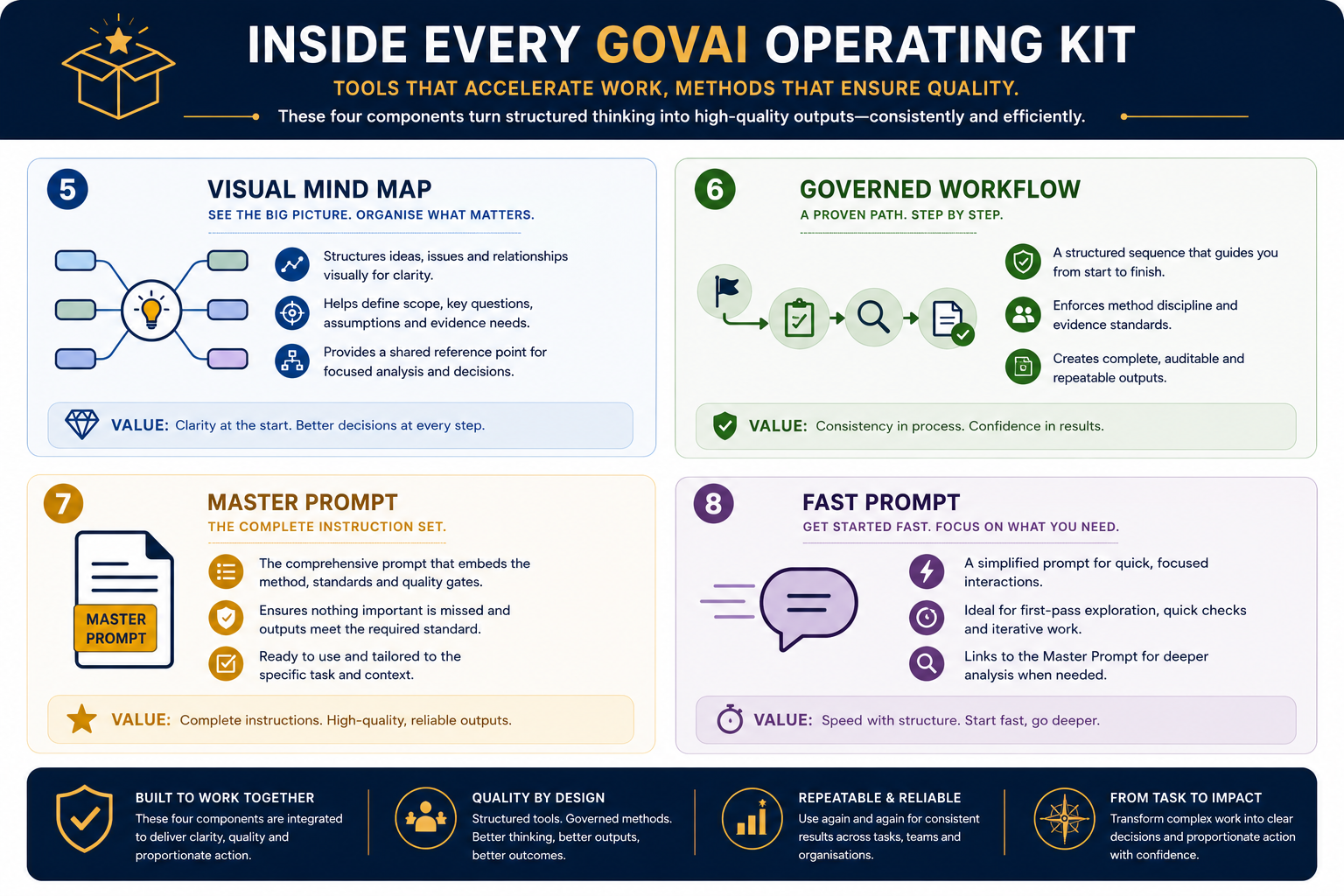
The Visual Mind Map makes ideas, issues and relationships visible. The Governed Workflow provides a controlled path from start to finish. The Master Prompt contains the complete task-specific operating instructions, governance rules and quality gates. The Fast Prompt supports routine or iterative work while preserving the essential method and allowing a return to the full Master Prompt for deeper analysis.
Read extended image description
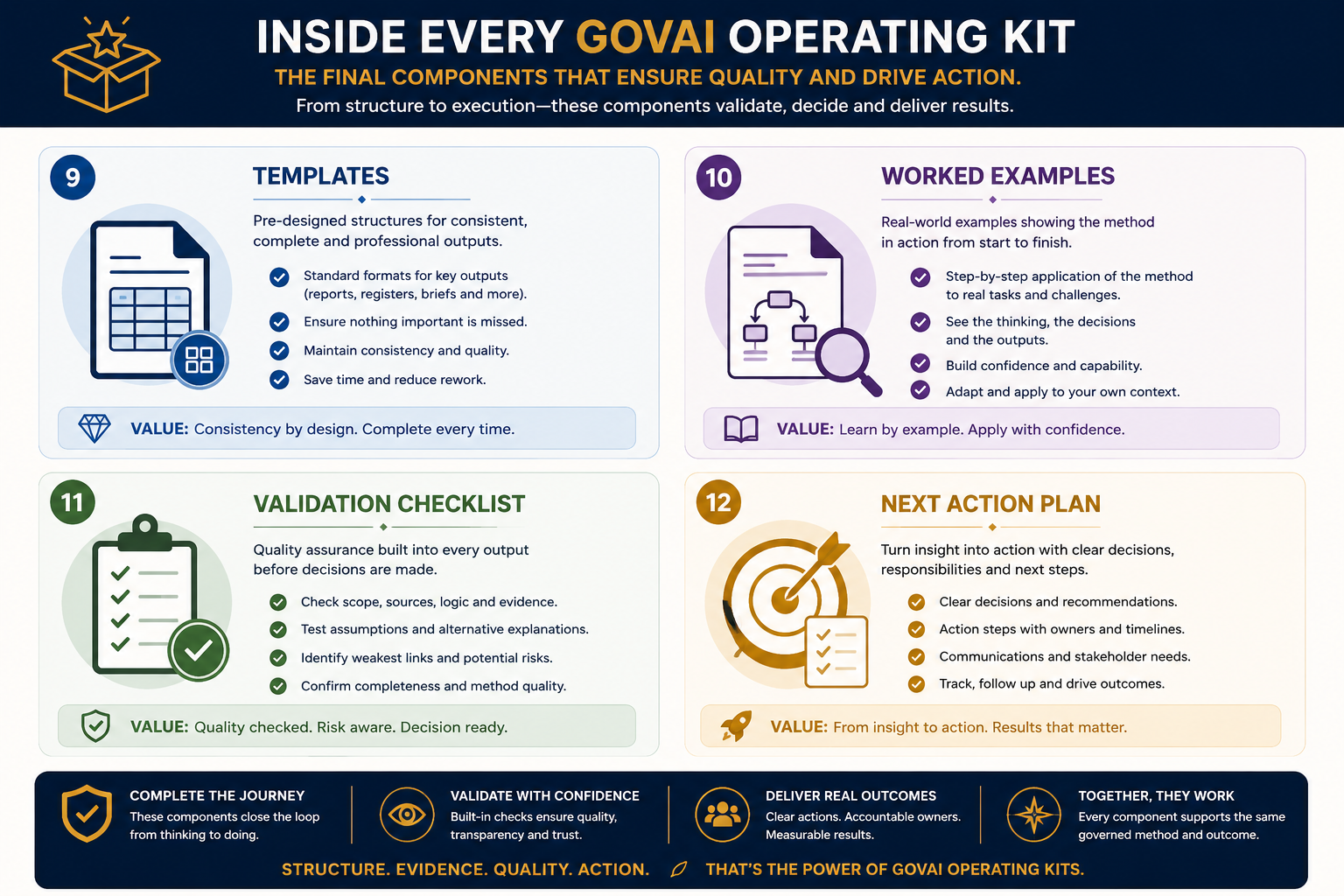
Templates provide consistent structures for reports, registers, briefs and other outputs. Worked Examples show the method applied to real tasks. The Validation Checklist checks scope, sources, logic, evidence, assumptions, alternatives, weakest links and completeness. The Next Action Plan converts the result into decisions, responsibilities, communications, follow-up and practical action.